
AntiScamNews is warning of an active digital fraud campaignusing the name and image of the Spanish Directorate General of Traffic (DGT)todeceive citizens. The method is simple but effective: text messages informing recipients of an alleged outstanding fine and urging them to make immediate payment via a link.
This type of scam is circulating strongly again and especially affects people who are expecting a real notification or who are not familiar with the Administration’s official communication channels.
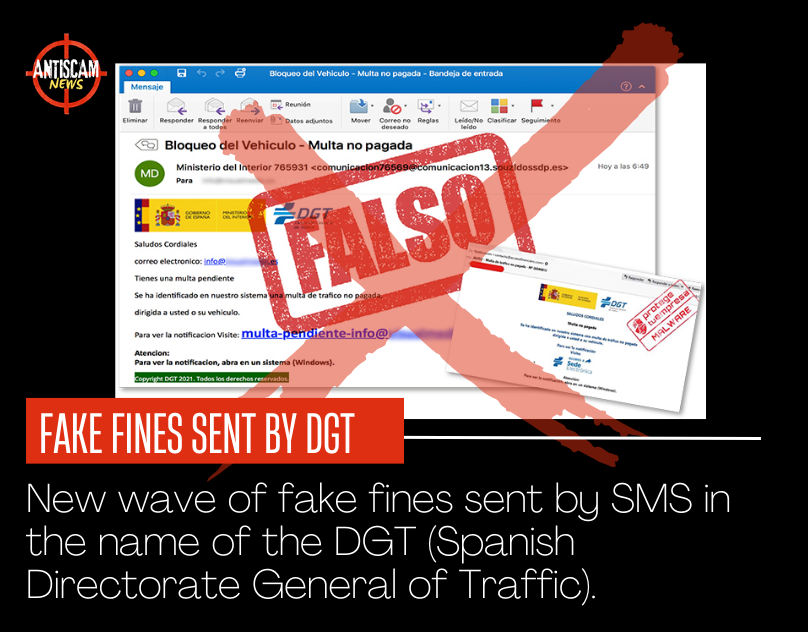
The message: brief, urgent, and designed to provoke fear.
Fraudulent text messages often include generic references to a traffic violation, usually speeding, and warn of surcharges or consequences if no action is taken immediately. The language is intentionally alarmist and aims to reduce the victim’s chances of thinking.
The included link redirects to pages that mimic the design of official websites, where payment is requested via Bizum , bank transfer, or credit card, or the entry of personal data. In some cases, clicking the link may trigger malicious downloads without the user’s knowledge.
What the DGT doesn’t do (and it’s worth remembering)
There is one essential point that debunks the deception: the DGT does not communicate fines by SMS or conventional email.
Sanctions are only notified through two channels:
- Certified mail, addressed to the vehicle owner’s address.
- Electronic Road Address (DEV), only if the citizen has registered voluntarily.
Any message that comes from outside these channels should be considered suspicious.
A persistent fraud despite official warnings
Both the DGT (Spanish Directorate General of Traffic) and the Guardia Civil (Spanish Civil Guard)have repeatedly stated that they do not request payments or personal information via direct messages. Even so, these scams continue to work because they exploit a common situation: receiving a traffic ticket is plausible and frequent for many drivers.
Scammers constantly adjust the format of their messages to make them more believable and avoid automatic filters, making them difficult to detect immediately.
What to do if you receive an alleged fine via SMS
At AntiScam we recommend:
- Do not open links or download files.
- Do not make payments through the channels indicated in the message.
- Delete the SMS immediately.
- Consult the official DGT website directly or access the DEV if you are registered.
If you have provided any information or made any payments, it is essential to contact the bank as soon as possible and file a complaint.
Prevention: the only effective defense
Fake fines sent via SMS are a clear example of phishing based on institutional impersonation. Understanding how public administrations actually communicate remains the best way to avoid falling for these types of scams.
In traffic matters, the rule is clear: if the fine arrives via SMS, it’s not official. At AntiScam, we will continue to report these scams to reduce their impact and prevent further victims.