
At AntiScamNews,we report on recurring fraud patterns that exploit major events, especially when high demand, emotional urgency, and lapses in control converge. The upcoming World Cup in Mexico embodies all these elements and, predictably, is already being used as bait by cybercrime networks.
The warnings aren’t limited to the irregular sale of tickets. Digital security experts are alerting to a whole ecosystem of scamsthat activates months before the tournament begins and affects travel, accommodation, online broadcasts, and supposedly official products.
This article should be read for what it is: a preventative warning.
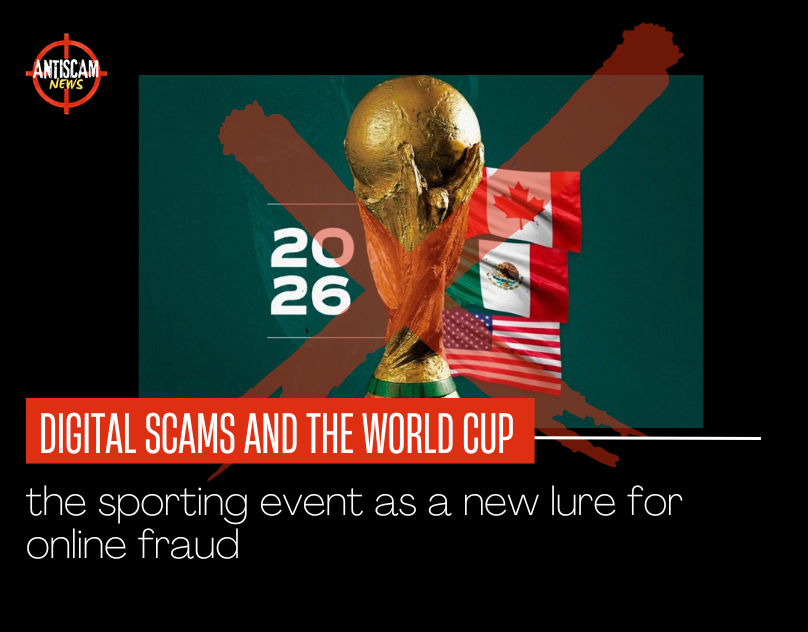
How World Cup scams operate
The scams detected so far follow a known, but increasingly sophisticated, pattern. The entry point is usually an advertisement, email, or message promising early access, limited availability, or “preferential” prices for World Cup matches.
The key lies in the artificial urgency. Virtual queues, “last tickets” messages, countdown timers, and supposed exclusive presales push users to act quickly and do little research. In that context, the decision isn’t rational: it’s emotional.
At AntiScamNews, we’ve documented this pattern at other massive events. The World Cup is no exception; it’s the amplifier.
Artificial intelligence: when fraud looks legitimate
One of the factors that exacerbates the risk is the intensive use of artificial intelligenceby scammers. Current tools allow them to create, in a matter of minutes, websites and communication campaigns that are virtually indistinguishable from official ones.
Among the most common tactics are:
- Visual cloning of legitimate pages
- Use of logos and designs identical to the originals
- Domains with minimal variations that go unnoticed
- Emails and messages written without obvious errors
In some cases, these fake pages even appear well positioned in search engines thanks to paid advertising, which reverses the user’s trust logic: what they see first is not always authentic.
The real loot isn’t always money.
Although fraudulent payments are the most immediate impact, in many cases the primary target is personal information. Fake forms collect data that is then reused or sold: names, documents, cards, addresses, and credentials.
This data fuels other crimes:
- Identity theft
- Application for loans in the name of the victim
- Digital extortion
- Chained frauds in the medium term
That’s why we insist: the damage doesn’t end when the money is lost.
Digital vulnerability and lack of regulation
The Mexican context presents an additional risk factor: a significant digital literacy gapand regulations that are not keeping pace with the threats. Industry studies show that a significant portion of users have difficulty identifying fraudulent emails or fake websites.
When this vulnerability is combined with a high emotional impact event like the World Cup, the result is predictable: fertile ground for fraud.
Prevention cannot fall solely on the consumer. Platforms, companies, organizers, and authorities also face reputational riskif they do not strengthen their verification and communication mechanisms.
Warning signs that should not be ignored
AntiScamNews recommends exercising extreme caution regarding:
- Offers not advertised on official channels
- Payments requested outside of verified platforms
- Sponsored links without prior verification
- Promises of guaranteed access or unrealistic discounts
- Messages that pressure you to decide “in minutes”
In digital fraud, haste always works in favor of the scammer.
Why are we publishing this warning?
Because fraud doesn’t start on match day, it starts long before.
Because the World Cup is an excuse, not the cause. And because prevention only works when information arrives on time.
At AntiScamNews,we will continue to document these schemes and warn about their evolution. The sporting spectacle hasn’t even started yet, but the fraud game is already underway.