
At AntiScamNews,we are warning about an active cyber fraud campaign targeting users of accommodation booking platforms, especially Booking.com. The fraud relies on a particularly sensitive element: the traveler’s trust in the accommodation they have already booked and paid for, or are about to do so.
The alert was issued by the Catalan Cybersecurity Agency, after detecting multiple cases of users who received fake messages impersonating the hotel or apartment they had booked .
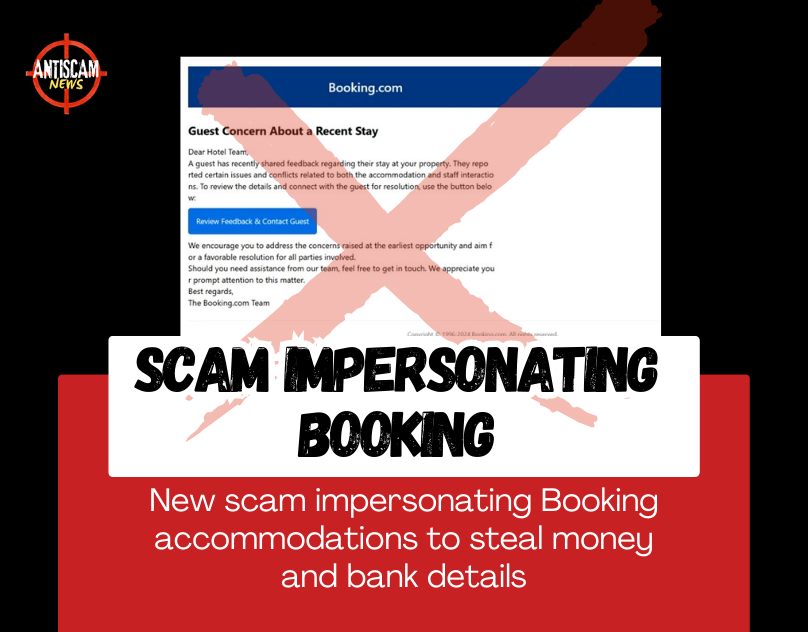
The deception: messages that appear legitimate and arrive through real channels
The scam begins with a message the user receives either on the Booking.com platform or via WhatsApp. In it, the supposed accommodation provider reports a payment problem, a pending security verification, or a technical error requiring immediate action.
The key to the deception is the level of detail. The messages typically include:
- Real name of the accommodation
- Exact reservation dates
- Number or identifier of the same
This information makes the ad seem authentic and reduces the customer’s initial suspicions.
Digital impersonation and credential theft
According to the Catalan Cybersecurity Agency , cybercriminals do not act randomly. In many cases, they have previously gained access to the accommodation providers’ accountsafter stealing their management credentials within the platform.
With the establishment’s username and password, scammers can:
- Access real booking data
- Communicate with customers via the official chat
- Generate messages that appear to be sent by the legitimate hotel.
This access explains why many frauds occur without leaving the Booking environment, which significantly increases the credibility of the scam.
The ultimate goal: immediate payment and bank details
The message usually includes a link that redirects to a fraudulent website that mimics the appearance of Booking.com. From there, the user is asked to enter their credit card details or make an additional payment to “secure” the reservation.
The tone is almost always urgent. The usual threat is immediate cancellation of the accommodationor the application of a temporary charge if no action is taken immediately. This pressure is deliberate and aims to prevent the victim from verifying the information.
Warning signs that should not be ignored
At AntiScam we highlight several clear signs of risk:
- Urgent requests for bank details
- External links sent by message
- Unexpected verification or payment notifications
- Threats of immediate cancellation
Even if the message comes from a seemingly official chat, no accommodation should request sensitive data in this way.
What do cybersecurity experts recommend?
The Cybersecurity Agency of Catalonia insists on :
- Do not click on links received via message or chat
- Do not enter bank details from external links
- Always verify the website address before authorizing payments
- Contact the accommodation directly through their official channels if you have any questions.
If the message creates urgency or pressure, the recommendation is clear: stop and check.
Traveling shouldn’t involve taking digital risks
These types of scams demonstrate how cybercriminals exploit moments of excitement and personal planning to maximize the impact of fraud. The journey begins long before packing your suitcase, and that’s where prevention should start as well.
At AntiScamwe will continue to denounce these practices and remind everyone of a basic rule: when an unexpected payment arrives with haste, the risk is real.