
Criminals are taking over email and social media accounts to impersonate their owners, sell nonexistent tickets and request money from people who trust them.
LONDON, UK — Reported losses linked to email and social media account hacking have risen by more than 400% in a year, as criminals use compromised accounts to defraud victims’ friends, relatives and colleagues.
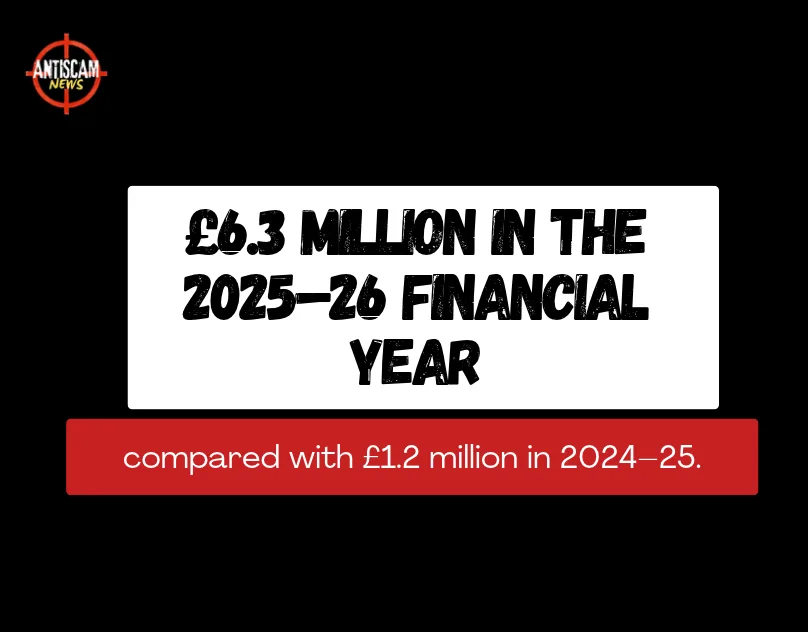
Figures from Report Fraud, the service run by the City of London Police, show that reported sums stolen reached £6.3 million in the 2025–26 financial year, compared with £1.2 million in 2024–25.
The figures, reported by The Guardian, concern financial losses recorded through reports. They do not establish that the number of scams increased at the same rate.
How social media hacking scams exploit personal relationships
Account takeover gives criminals access to something more persuasive than an unfamiliar profile: an identity that potential victimsalready recognise.
Once inside an email or social media account, fraudsters can approach the owner’s contacts while appearing to be a friend, relative or colleague. A request for money or an offer of tickets may therefore receive less scrutiny than a message from a stranger.
The account holder can also suffer consequences beyond losing access. Their identity becomes the means through which other people are deceived, potentially damaging relationships as well as causing financial losses.
Fake concert tickets offered through genuine accounts
One method involves advertising tickets to popular or sold-out events through a compromised profile.
The Guardian previously documented the case of a music fan whose Instagram account was hijacked and used to offer tickets to an Oasis concert. Friends lost £1,400 after believing they were dealing with the genuine account owner. The victim said the impersonation was convincing enough to mislead people who knew her personally.
Impersonation fraud also targets families through urgent messages
Other scams rely on messages claiming that a child or relative needs money immediately. Often described as the “Hi mum” scam, this approach uses a supposed emergency to encourage payment before the recipient checks who is making the request.
These messages do not necessarily involve a hacked account. The distinction matters: account takeover uses access to someone’s existing profile, while other impersonation attempts may originate from a different number or account.
Both exploit the recipient’s willingness to help someone they believe they know. The misuse of familiar identities also appears in AntiScamNews coverage of fraudsters impersonating accommodation providers on Booking.com, where apparent familiarity with a service can make fraudulent payment requests more convincing.
The damage can extend beyond the original account holder
Chief Superintendent Amanda Wolf, head of Report Fraud operations, warned that compromised accounts can expose personal information and enable criminals to target the owner’s wider network.
The financial figures may also understate the harm. Some victims do not report what happened because they feel embarrassed or consider the individual loss too small.
For the person whose identity has been misused, recovering access does not automatically repair the consequences. Friends or relatives may already have transferred money while believing they were responding to a legitimate request.
Check through a separate channel before sending money
An unexpected payment request should be verified independently, even when it arrives through a familiar account.
Report Fraud advises contacting the person through another route, such as a telephone call or an in-person conversation. Continuing to exchange messages inside the potentially compromised account does not establish who is responding.
A familiar profile can explain why a request feels credible. It cannot, by itself, confirm who is behind it.
Source: The Guardian